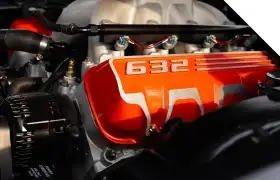
Explore Chevy Engines in North Florida

Explore Chevy Engines in North Florida

Gordon Chevrolet maintains a library of engine overview pages for North Florida shoppers researching the powertrains behind the Chevrolet lineup. This page is the centralized guide to the engines that appear across Chevy vehicles, from the efficient turbocharged four-cylinders that power the subcompact and compact lineup through the heavier-duty powertrains that define the full-size trucks and performance platforms.

Engine research matters because the powertrain is the mechanical foundation of how a vehicle performs, what it costs to own, and how it fits the way you drive. The library below is organized by engine family so you can scan the group that matches your research question. Each engine links directly to its full overview page, where you can see complete specifications, platform history, and the vehicles that use it.

Explore Engines by Category

Tap a category below to jump straight to that section, or scroll through the full lineup in order.

Turbocharged Four-Cylinder Engines

The turbocharged four-cylinder group is the backbone of Chevrolet's modern powertrain lineup and the engine family most commonly encountered across the brand's subcompact, compact, and midsize vehicles. These engines combine smaller displacement with forced induction to deliver competitive power and efficiency in the same package, which is why they anchor the standard powertrains on many of the Chevy vehicles currently on our Orange Park lot.

Research in this group typically centers on how the different turbocharged options compare to each other, particularly on models where multiple engine choices are offered, and on how a specific turbocharged engine fits the way the shopper plans to use the vehicle.

Chevy 1.2L LBP EcoTec

The 1.2L LBP EcoTec is Chevrolet's most compact turbocharged engine and the standard powertrain in the current Trax and the front-wheel-drive Trailblazer. It brings turbocharging and flex-fuel capability to the subcompact and compact SUV segment, delivering responsive low-end torque while keeping fuel economy competitive for daily driving.

  • 137 horsepower
  • 162 lb-ft of torque at 2,500 RPM
  • E85 flex-fuel capable

Learn more on our Chevy 1.2L LBP EcoTec page.

Chevy 1.3L L3T EcoTec Turbo

A three-cylinder turbocharged engine developed to deliver a balance of efficiency and torque in small-displacement applications, the 1.3L L3T EcoTec Turbo sits between the 1.2L and 1.4L engines in the turbocharged lineup. It represents Chevrolet's exploration of three-cylinder technology in the North American market.

  • Three-cylinder turbocharged design
  • Small-displacement turbocharged architecture

Full details are on our Chevy 1.3L L3T EcoTec Turbo page.

Chevy 1.4L LUV EcoTec Turbo

The 1.4L LUV EcoTec Turbo earned a strong reputation for durability during its years as the standard powertrain in the 2020 Trax and the Sonic. Its turbocharger is tuned to deliver 148 lb-ft of torque at a low 1,850 RPM, which gave those vehicles the peppy low-end response that shoppers noticed in city driving.

  • 148 lb-ft of torque at 1,850 RPM
  • Proven powertrain in pre-owned Trax and Sonic inventory
  • Turbocharged four-cylinder with low-end torque focus

Read the complete overview on our Chevy 1.4L LUV EcoTec Turbo page.

Chevy 1.5L LSD Turbo

One of three 1.5L turbocharged engines in the Chevrolet lineup, the 1.5L LSD Turbo sits within the broader 1.5L family alongside the LFV and LYX variants. Shoppers who have encountered the engine code on a specific vehicle and want to verify which version powers the vehicle they are considering will find the full specifications on the engine overview page.

  • 1.5L turbocharged four-cylinder
  • Part of Chevrolet's 1.5L turbocharged engine family

Learn more on our Chevy 1.5L LSD Turbo page.

Chevy 1.5L LFV Turbo

A second variant in Chevrolet's 1.5L turbocharged family, the 1.5L LFV Turbo is used on specific vehicles where the powertrain tuning and hardware configuration differ from the LSD or LYX. Shoppers researching a 1.5L engine should confirm which variant powers the vehicle they are considering because the designations matter for parts compatibility and service records.

  • 1.5L turbocharged four-cylinder
  • Distinct tuning within the 1.5L family

Full details are on our Chevy 1.5L LFV Turbo page.

Chevy 1.5L LYX Turbo

Completing Chevrolet's 1.5L turbocharged trio, the 1.5L LYX Turbo appears in applications where its specific tuning fits the platform. The three 1.5L variants are a good example of why engine code verification matters when researching a used Chevrolet, because the displacement alone does not tell the complete story.

  • 1.5L turbocharged four-cylinder
  • Platform-specific tuning within the 1.5L family

Read the complete overview on our Chevy 1.5L LYX Turbo page.

Chevy 2.0L LSY Turbo

Stepping up in displacement, the 2.0L LSY Turbo is one of two 2.0L turbocharged engines in the Chevrolet lineup and typically appears in performance-oriented applications where the additional displacement supports stronger torque output. The LSY and the LTG are distinct variants, and shoppers should confirm which 2.0L powers the vehicle they are researching.

  • 2.0L turbocharged four-cylinder
  • Performance-oriented tuning within the 2.0L family

Learn more on our Chevy 2.0L LSY Turbo page.

Chevy 2.0L LTG Turbo

Serving as the second 2.0L variant in the Chevrolet lineup, the 2.0L LTG Turbo was a popular powertrain across several performance-oriented applications. Research into the LTG often ties back to specific vehicles that used it, which is why the engine page covers platform history and application details.

  • 2.0L turbocharged four-cylinder
  • Distinct application history within the 2.0L family

Full details are on our Chevy 2.0L LTG Turbo page.

Chevy 2.5L LK0 Turbo

The 2.5L LK0 Turbo moves the turbocharged lineup into larger-displacement territory and delivers the additional power output that comes with increased displacement plus forced induction. This engine appears in applications where Chevrolet needed more torque than the 2.0L variants could produce while staying within the four-cylinder architecture.

  • 2.5L turbocharged four-cylinder
  • Larger-displacement turbocharged application

Read the complete overview on our Chevy 2.5L LK0 Turbo page.

Chevy 2.7L L2R Turbo

As the predecessor to the current TurboMax engine, the 2.7L L2R Turbo represents an earlier generation of Chevrolet's large-displacement four-cylinder turbocharged architecture. Shoppers researching pre-owned Silverado 1500 inventory may encounter this engine code and benefit from understanding how it compares to the newer TurboMax.

  • 2.7L turbocharged four-cylinder
  • Predecessor to the current L3B TurboMax architecture

Learn more on our Chevy 2.7L L2R Turbo page.

Chevy 2.7L L3B TurboMax

The 2.7L L3B TurboMax is the current standard powertrain in the Silverado 1500 and the flagship four-cylinder engine in the Chevrolet lineup. It delivers V8-competitive torque in a smaller package, which makes it one of the most-researched engines in the current truck segment for shoppers deciding between the TurboMax and the available V8 alternatives on the Silverado 1500.

  • 310 horsepower
  • 430 lb-ft of torque
  • Standard powertrain on the 2026 Silverado 1500

Full details are on our Chevy 2.7L L3B TurboMax page.

Naturally Aspirated Four-Cylinder Engines

The naturally aspirated four-cylinder group covers the engines in the Chevrolet lineup that deliver their power without turbocharging, relying instead on displacement and engine design to produce their output. These engines appeal to buyers who prefer the predictable power delivery of a naturally aspirated architecture or who are shopping for a specific vehicle where Chevrolet offers this engine as the standard or available powertrain.

Research in this group typically centers on the trade-offs between naturally aspirated and turbocharged alternatives on the same platform, particularly for shoppers who value long-term reliability and want to understand what the non-turbocharged option gives up and gains compared to a boosted engine of similar displacement.

Chevy 2.5L LCV

A naturally aspirated four-cylinder engine in the Chevrolet lineup, the 2.5L LCV offers the straightforward power delivery and proven architecture that buyers who prefer non-turbocharged engines specifically research. It represents a different design philosophy from the turbocharged four-cylinders that dominate the rest of the lineup and is worth understanding for shoppers weighing that trade-off.

  • 2.5L naturally aspirated four-cylinder
  • Non-turbocharged power delivery

Learn more on our Chevy 2.5L LCV page.

V6, V8, and Specialty Engines

The V6, V8, and specialty group covers the larger and higher-output engines that power Chevrolet's full-size trucks, full-size SUVs, and performance vehicles. The Silverado 1500 offers 5.3L and 6.2L V8 options along with an available 3.0L Duramax turbodiesel. The Silverado HD family offers the heavy-duty Duramax diesel designed for maximum towing and payload applications. The Tahoe and Suburban share V8 powertrain options with the Silverado platform, and the Corvette Stingray is powered by the naturally aspirated 6.2L LT2 V8 in a mid-engine configuration.

Engine overview pages for the V6, V8, and specialty powertrains are being built and will be added to this section as they are published. In the meantime, you can browse vehicles that use these engines directly on our New Chevy Silverado 1500 Inventory, New Chevy Tahoe Inventory, New Chevy Suburban Inventory, New Chevy Silverado HD Inventory, and New Chevy Corvette Inventory pages.

Take the Next Step at Gordon Chevrolet

Take the Next Step at Gordon Chevrolet

Once you have identified the Chevrolet engine that fits the way you drive, the tools below help you move from powertrain research into the vehicle and the purchase process itself.

Browse the full Chevrolet lineup on our New Vehicle Inventory page, review current offers on our New Vehicle Specials page, start a credit application through the Finance Center, or check your current vehicle's value through our Trade-In Value tool.

Frequently Asked Questions About Chevy Engines

The Corvette ZR1 sits at the top of the current Chevrolet performance lineup with its supercharged V8, and the 6.2L V8 delivers the highest output among the mainstream Silverado, Tahoe, and Suburban applications. The 2.7L L3B TurboMax serves as the highest-output four-cylinder in the lineup. Browse the full range on our New Vehicle Inventory page to see which engine each vehicle uses.

The 2.7L L3B TurboMax is the standard engine on the Silverado 1500 and delivers 310 horsepower and 430 lb-ft of torque from a turbocharged four-cylinder architecture. The available 5.3L V8 and 6.2L V8 options move the truck into traditional V8 territory, with higher peak horsepower and different power delivery characteristics. The TurboMax leads on standard torque, while the V8 options lead on peak horsepower. Full details are on our Chevy 2.7L L3B TurboMax page.

Chevrolet engines are identified by a combination of displacement, an internal engine code such as LBP, LSY, or L3B, and often a family name such as EcoTec, Duramax, or TurboMax. The displacement tells you the size, the engine code identifies the specific variant, and the family name identifies the broader architectural group. This naming matters because Chevrolet often offers multiple variants within a single displacement, such as the three different 1.5L turbocharged engines in the current lineup.

The 1.2L LBP EcoTec is Chevrolet's flagship flex-fuel engine in the current lineup, offering E85 capability as a standard feature on the Trax and the front-wheel-drive Trailblazer. This gives buyers the freedom to choose between standard gasoline and E85 based on availability and cost. Full details are on our Chevy 1.2L LBP EcoTec page.

Yes. The 3.0L Duramax turbodiesel is an available option on the Silverado 1500 and remains a distinctive choice in the light-duty truck segment. The Silverado HD family offers a heavy-duty Duramax diesel designed for maximum towing and payload applications. Engine overview pages for both Duramax variants are being built and will appear in the V6, V8, and Specialty section above when published.

Chevrolet has developed multiple variants within several displacement classes because different vehicle platforms have different packaging, tuning, and performance requirements. The 1.5L family includes the LSD, LFV, and LYX variants, and the 2.0L family includes the LSY and LTG variants. The engine code identifies which specific variant powers a given vehicle, which matters for specifications, service records, and parts compatibility.

Cross-brand engine comparisons are covered on our Chevrolet Comparisons hub, which includes head-to-head comparisons of full-size trucks, SUVs, and other vehicles. You can also review the full Chevrolet model lineup on our Chevy Models overview hub to see how engine availability maps to each vehicle in the brand's range.

See the Chevy powertrain that fits the way you drive at Gordon Chevrolet, 1166 Blanding Blvd, Orange Park, FL 32065. Call (904) 592-3846 to schedule a test drive, or browse the full lineup on our New Vehicle Inventory page.

Menu

Gordon Chevrolet,inc. 30.1292, -81.78918.