Sales:
(904) 592-3846
Service:
(904) 592-3831
Parts:
(904) 592-3799
Open Today Sales: 9 AM-7 PMOpen Today Service: 7 AM-6 PM




The 2026 Chevrolet Traverse and 2026 Toyota Grand Highlander are both 3-row midsize SUVs, but they take opposite approaches under the hood. The Traverse runs a single strong gas turbo, while the Grand Highlander offers a choice of 3 setups, including 2 hybrids. That single decision, gas or hybrid, shapes the rest of this comparison more than anything else.
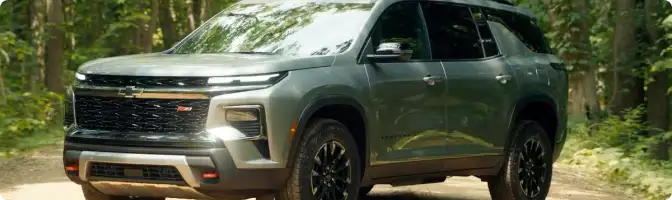
The Traverse offers a single engine and the Grand Highlander offers 3, which is the first real fork in this decision. The Traverse uses a single 2.5L turbo gas 4-cylinder good for 328 hp and 326 lb-ft. The Grand Highlander spreads its range across a base gas turbo, a fuel-sipping hybrid, and a performance-focused Hybrid MAX that makes the most power of anything here.
| Setup | Engine | Horsepower |
|---|---|---|
| Traverse | 2.5L turbo 4-cylinder | 328 hp |
| Grand Highlander Gas | 2.4L turbo 4-cylinder | 265 hp |
| Grand Highlander Hybrid | 2.5L hybrid 4-cylinder | 245 hp combined |
| Grand Highlander Hybrid MAX | 2.4L turbo hybrid | 362 hp combined |
The headline torque figures land at opposite ends: the Traverse's 326 lb-ft clears both of the Grand Highlander's lesser engines, while the Hybrid MAX tops the chart at 400 lb-ft.
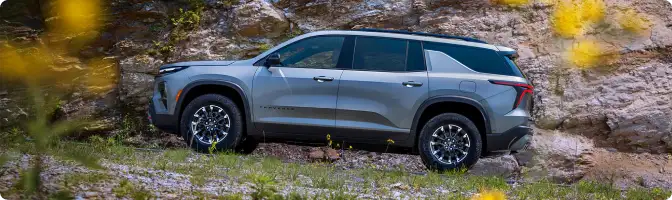
The powertrain you pick matters more than the badge here, because only one of these SUVs offers a hybrid at all. If fuel economy is the priority, the Grand Highlander Hybrid is the clear answer, returning mid-30s mpg where the Traverse's gas turbo lands in the low-to-mid 20s. If you want straightforward power without a hybrid system, the Traverse's 328-hp turbo beats the Grand Highlander's 265-hp base gas engine and its 245-hp standard hybrid. And if you want the most muscle on the table, the Grand Highlander Hybrid MAX leads everything here at 362 hp and 400 lb-ft. The Traverse answers the efficiency pitch a different way: available Super Cruise lets you cover long First Coast highway miles hands-free, which Toyota does not offer at any trim.
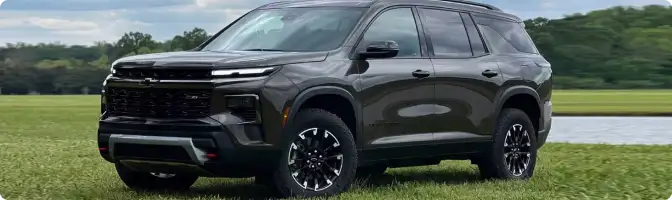
The Grand Highlander Hybrid is the efficiency leader, and the Traverse has no hybrid to match it. A front-drive Grand Highlander Hybrid is rated around 37 city and 34 highway, while the Traverse's gas turbo rates 20 city and 26 highway. The Grand Highlander's base gas engine also edges the Traverse on paper. The trade-off shows up at the top of the range: the 362-hp Hybrid MAX prioritizes performance over economy and rates 26 city and 27 highway, closer to the Traverse than to its own hybrid sibling.
| Configuration | EPA MPG (city / hwy) |
|---|---|
| Traverse (gas, FWD) | 20 / 26 |
| Grand Highlander Gas (FWD) | 21 / 28 |
| Grand Highlander Hybrid (FWD) | 37 / 34 |
| Grand Highlander Hybrid MAX (AWD) | 26 / 27 |
For First Coast drivers stacking up highway miles between Orange Park, the I-295 loop, and longer coastal hauls, the hybrid's mid-30s mpg is a real monthly saving, while the Traverse answers by making those same miles hands-free.
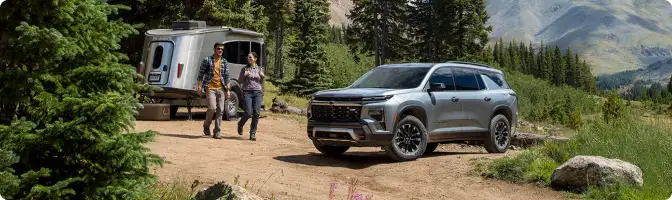
Both SUVs top out at a 5,000-pound tow rating, with one catch on the Toyota side. The Traverse pulls 5,000 pounds, and the Grand Highlander matches it with the gas and Hybrid MAX setups, but the standard Grand Highlander Hybrid is rated at 3,500 pounds. Drivetrain choices line up closely, since each starts front-wheel drive with all-wheel drive available, though the Grand Highlander's Hybrid MAX comes only with all-wheel drive. For buyers who want light off-road capability, the Traverse offers a Z71 with Twin-Clutch all-wheel drive, where the Grand Highlander has no direct off-road grade.
| Capability | Traverse | Grand Highlander |
|---|---|---|
| Max towing | 5,000 lbs | 5,000 lbs (gas and Hybrid MAX) |
| Lowest tow rating | 5,000 lbs | 3,500 lbs (Hybrid) |
| Drivetrain | front-wheel drive standard, AWD available | front-wheel drive standard, AWD available; Hybrid MAX is AWD only |
| Off-road trim | Z71 with Twin-Clutch AWD | not offered |
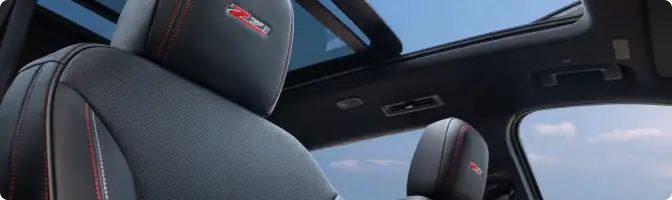
Space is close to a wash, so this section is unlikely to decide your purchase. Both SUVs seat up to 8, both offer a second-row bench or captain's chairs, and maximum cargo room is nearly identical at up to 98 cubic feet for the Traverse and 97.5 for the Grand Highlander. If you regularly fold everything flat for cargo runs, you will not notice a meaningful gap between them.
| Space | Traverse | Grand Highlander |
|---|---|---|
| Max seating | 8 | 8 |
| Second-row options | bench (seats 8) or captain's chairs (seats 7) | bench (seats 8) or captain's chairs (seats 7) |
| Max cargo volume | up to 98 cu ft | up to 97.5 cu ft |
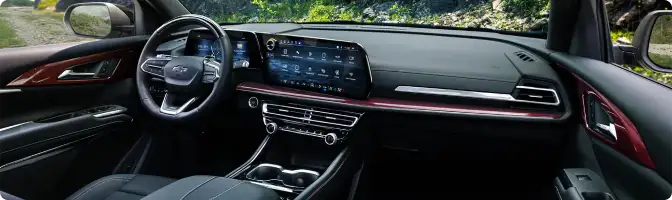
The Traverse leads on its center screen and on hands-free driving, while the Grand Highlander answers with a larger driver display. The Traverse centers the cabin on a 17.7-inch touchscreen with Google built-in, paired with an 11-inch driver information screen. The Grand Highlander runs a 12.3-inch touchscreen and a larger 12.3-inch digital cluster, with an available 10-inch head-up display.
| Technology | Traverse | Grand Highlander |
|---|---|---|
| Center touchscreen | 17.7-inch | 12.3-inch |
| Driver display | 11-inch | 12.3-inch digital cluster |
| Hands-free driving | available Super Cruise | not offered |
| Standard safety suite | Chevy Safety Assist | Toyota Safety Sense 3.0 |
The biggest technology gap is hands-free driving. Toyota has no answer to Super Cruise, which the Traverse offers across more than 585,000 miles of compatible roads and makes standard on the RS and High Country. Toyota Safety Sense 3.0 gives the Grand Highlander radar cruise control, lane tracing, and pre-collision braking, but all of it keeps your hands on the wheel. See how Super Cruise handles local highways in our look at Super Cruise hands-free driving in Florida.
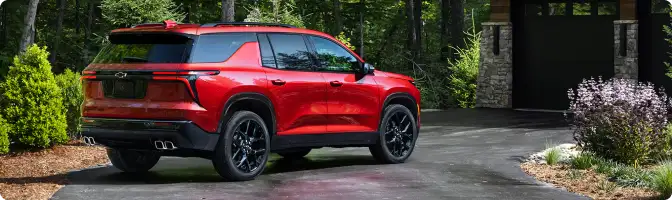
Pick the Grand Highlander if a hybrid is the point, whether that means the efficient standard hybrid or the 362-hp Hybrid MAX; pick the Traverse for stronger standard gas power, a larger touchscreen, and available hands-free driving. The Traverse makes the better case for families who want a single capable gas engine and Super Cruise without paying for a hybrid system. The Grand Highlander makes the better case for buyers set on hybrid efficiency or chasing the most power in the class.
When the build you want is not on the lot, we can locate it elsewhere or configure one to order, and the full range of Chevrolet SUVs is there to browse while you weigh your options.
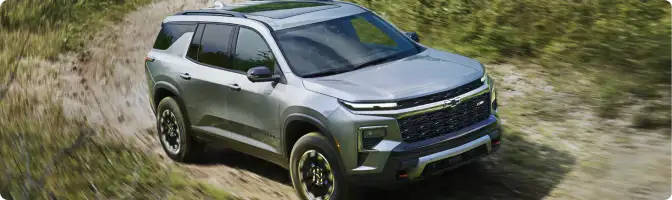
A spec sheet can rank these two, but a drive is what tells you whether you want the Traverse's turbo punch and hands-free highway driving or a hybrid's skipped fuel stops. We keep the 2026 Traverse on the lot across the LT, Z71, RS, and High Country, so you can feel the difference before you decide. Our price is the No Bull number: competitive, with no add-on stickers, no forced packages, and nothing padded onto the total. You can bring a trade, but you do not need one to get it. New Traverse buyers also get free paintless dent repair through the first 90 days, and you will find us on the money-saving end of Blanding Blvd.
2026 Chevrolet Traverse Inventory
Knock out the rest from home: value your trade or take a no-obligation cash offer, size up a monthly payment, and get prequalified with no impact to your credit score. You can also browse other Chevrolet comparisons before you visit.
Shoppers weighing the Traverse against the Grand Highlander ask these most.
No. The Traverse is gas only, with a 2.5L turbo making 328 hp. If a hybrid 3-row is your priority, the Grand Highlander offers one, but the Traverse counters with more standard power than the Grand Highlander's base gas and hybrid engines, plus available Super Cruise.
It depends on which Grand Highlander engine you mean. The Traverse's 328 hp tops the Grand Highlander's 265-hp base gas and 245-hp hybrid, but the Grand Highlander Hybrid MAX leads both at 362 hp and 400 lb-ft.
The Grand Highlander Hybrid, clearly. It returns mid-30s mpg, around 37 city and 34 highway in front-drive form, against the Traverse's 20 city and 26 highway. The Traverse has no hybrid option to close that gap.
The Traverse tows 5,000 pounds, and the Grand Highlander matches it with the gas and Hybrid MAX setups. The standard Grand Highlander Hybrid is rated lower, at 3,500 pounds, so the right configuration depends on which engine you choose.
The Hybrid is built for efficiency, with 245 combined hp and mid-30s mpg. The Hybrid MAX is built for performance, with 362 hp, 400 lb-ft, and a 5,000-pound tow rating, at the cost of fuel economy closer to 27 mpg. The Traverse sits between them on power and offers no hybrid at all.
Both seat up to 8, using a second-row bench, or up to 7 with second-row captain's chairs. Seating capacity is a tie.
They are essentially even. The Traverse offers up to 98 cubic feet of maximum cargo room and the Grand Highlander up to 97.5, a difference most families will never notice.
The Traverse, at 17.7 inches with Google built-in, against the Grand Highlander's 12.3-inch touchscreen. The Grand Highlander counters with a larger 12.3-inch digital driver display and an available 10-inch head-up display.
No. Available Super Cruise is a Traverse feature the Grand Highlander does not match. The Grand Highlander comes with Toyota Safety Sense 3.0, which includes radar cruise control and lane tracing, but the driver keeps hands on the wheel.
The Traverse is on our lot in Orange Park, right on the Blanding Blvd corridor and a short drive for most of Clay County and the Jacksonville metro. Since the toughest call here is gas versus hybrid, the most useful thing you can do is drive the Traverse and feel its turbo and hands-free highway manners for yourself before you decide.