Sales:
(904) 592-3846
Service:
(904) 592-3831
Parts:
(904) 592-3799
Open Today Sales: 9 AM-7 PMOpen Today Service: 7 AM-6 PM




The 2026 Chevrolet Colorado and 2026 Nissan Frontier make the same peak horsepower, 310 each, and get there in opposite ways. The Colorado uses a turbocharged 4-cylinder, while the Frontier holds onto a naturally aspirated 3.8-liter V6, one of the few midsize trucks that still makes a V6 its standard engine. That single choice shapes how each truck pulls, how it is built, and what it asks of you.
The quick read: the Colorado turns its turbo into more torque, more towing, and a bigger standard screen, while the Frontier answers with V6 simplicity, more ways to configure the cab and bed, and a fuel-economy result that lands dead even. Neither is the default winner, which is what makes this a real cross-shop.
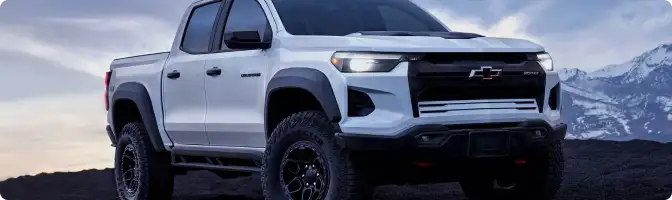
The two trucks reach 310 horsepower from completely different engines. The Colorado runs a 2.7-liter turbocharged 4-cylinder, rated at 237 horsepower and 259 lb-ft standard and 310 horsepower and 430 lb-ft in High-Output form. The Frontier runs a 3.8-liter naturally aspirated V6 making 310 horsepower and 281 lb-ft, paired with a 9-speed automatic. Nissan is among the few still making a V6 its standard engine in this class, where the Colorado and most rivals use a turbocharged four instead.
| Engine | Colorado | Frontier |
|---|---|---|
| Type | 2.7L turbo-4 | 3.8L V6, naturally aspirated |
| Horsepower | 237 std / 310 High-Output | 310 |
| Torque (lb-ft) | 259 std / 430 High-Output | 281 |
| Transmission | 8-speed automatic | 9-speed automatic |
The horsepower tie hides a real difference in how you get there. The Frontier hands you 310 horsepower as its standard and only engine, which beats the Colorado's base 237-horsepower tune. To match the Frontier's horsepower, the Colorado needs its High-Output engine, and once it does, it pulls well ahead on torque, 430 lb-ft to 281. So the Frontier is the stronger standard engine, and the Colorado's available engine is the stronger engine overall, especially where torque matters.

The Colorado tows and carries a little more than the Frontier. A properly equipped Colorado is rated to 7,700 pounds and up to 1,684 pounds of payload. The Frontier tows up to 7,150 pounds and carries up to 1,620, with both figures shifting by cab, bed, and drivetrain. The gap is real but modest.
| Capability | Colorado | Frontier |
|---|---|---|
| Max towing | 7,700 lbs | up to 7,150 lbs |
| Max payload | 1,684 lbs | up to 1,620 lbs |
For everyday work the two land close enough that the right call is to match the rating on a specific build to what you tow and haul. Where the Colorado separates is under sustained load, where its extra torque does the heavier lifting.

The Frontier offers more ways to configure the truck than the Colorado does. The Colorado comes one way: a crew cab with a single 5-foot, 2-inch short box. The Frontier offers a choice of King Cab or Crew Cab and a choice of the standard bed or a 6-foot long bed, so a buyer who wants a smaller cab with a longer box, or a full crew cab with extra bed length, can build it.
If your use case points to a specific layout, a longer bed for materials or a King Cab for a tighter footprint, the Frontier's menu can fit it more precisely. If a crew cab with a short bed is what you were going to order anyway, the Colorado covers it and keeps the lineup simple from the work truck up to the ZR2.

Fuel economy comes out even, which is the surprise of this matchup. A rear-drive Colorado and a rear-drive Frontier are both rated at 21 mpg combined, with identical 19 city and 24 highway numbers. In four-wheel drive both land at 19 combined. At the off-road top end the Frontier PRO-4X rates 18 combined against the Colorado ZR2's 17.
| Configuration | Colorado | Frontier |
|---|---|---|
| 2WD | 21 (19/24) | 21 (19/24) |
| 4WD | 19 (17/22) | 19 (17/21) |
| Off-road flagship | 17 (ZR2) | 18 (PRO-4X) |
The turbo does not buy the Colorado a fuel-economy edge over the larger V6, so efficiency is unlikely to be the tiebreaker in the configurations most buyers shop. The Colorado does hold a larger 21.3-gallon tank against the Frontier's smaller capacity, which stretches range a bit further between fill-ups.
Both trucks have a dedicated off-road trim, and the Colorado's is the more hardware-heavy of the two. The Colorado ZR2 brings locking front and rear differentials, Multimatic DSSV dampers, up to 10.7 inches of ground clearance, and a 38.3-degree approach angle. The Frontier PRO-4X answers with an Off-Road Mode, skid plates, and off-road tires, with the Trail Boss and Z71 sitting between the Colorado's base trims and the ZR2.
For technical, low-speed work, the ZR2's twin lockers and Multimatic DSSV dampers give it the deeper hardware set. The PRO-4X is a capable, well-equipped off-roader that covers most trails a midsize truck will see. If the goal is the most serious factory rock-crawl setup of the two, that is the ZR2; if it is a proven, ready-to-go off-road trim, the PRO-4X earns its place.
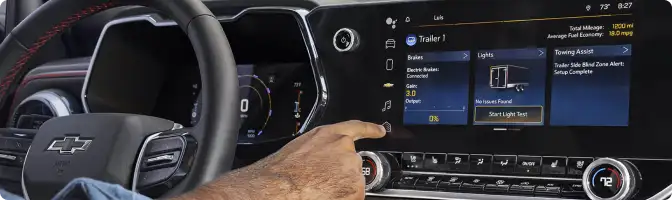
The Colorado leads on the standard screen, while the Frontier offers a large display and a 360-degree camera higher up. Every Colorado includes an 11.3-inch touchscreen with Google built-in and an 11-inch driver display, standard across the lineup. The Frontier offers an available 12.3-inch NissanConnect touchscreen and an Around View Monitor that stitches a 360-degree view around the truck, both welcome on a vehicle this size in tight spaces.
Driver assistance is closely matched. The Colorado comes with Chevy Safety Assist standard, covering automatic emergency braking, lane keep assist, and forward collision alert. The Frontier includes Nissan Safety Shield 360, which bundles its own automatic braking, blind-spot, and rear cross-traffic systems. Neither truck includes a hands-free highway driving system.

Specs narrow it down, but the seat time is what makes the call. Sitting in the crew cab, loading the bed, and feeling how the High-Output turbo pulls is what tells you whether the Colorado fits the work you do, from a daily run around the I-295 loop to years of high-mileage hauling in Florida heat.
The price side is No Bull, plain and simple: a competitive figure with no add-on stickers, no forced packages, and nothing slipped onto the total at the end. Bring a trade if you have one, but you do not need it to get our number. New Colorado buyers also get free paintless dent repair through the first 90 days, which takes the sting out of the first stray cart or door ding. It is one reason the money-saving end of Blanding Blvd is worth the drive.
If the cab, bed, or color you want is not on the lot, we can track one down or order it built to your spec through our Chevrolet configurator, and the full lineup of new Chevrolet trucks is there to compare if you are still settling on size. You can get the paperwork moving before you visit: value your trade or request a no-obligation cash offer, estimate a monthly payment, and get prequalified with no impact to your credit score. More side-by-sides live on our Chevrolet comparisons page, and current 2026 Colorado inventory shows what is ready to drive today.
A few questions settle most Colorado-versus-Frontier decisions.
Yes, both peak at 310 horsepower. The difference is how. The Frontier makes 310 from its standard 3.8-liter V6, while the Colorado makes 237 from its base engine and 310 from the High-Output version of its 2.7-liter turbo-4. At the matching horsepower, the Colorado also makes far more torque, 430 lb-ft to 281.
Yes. The Frontier's standard and only engine is a 3.8-liter naturally aspirated V6, where the Colorado and most midsize rivals have moved to a turbocharged 4-cylinder. A few trucks still offer a standard V6, but in this class it has become the exception.
The Colorado, by a modest margin. It is rated up to 7,700 pounds against the Frontier's 7,150. Both numbers vary by cab, bed, and drivetrain, so the figure on a specific build is the one to check against your trailer's loaded weight.
The Colorado, clearly, in High-Output form. It makes 430 lb-ft against the Frontier's 281. Torque is what a truck leans on when pulling a load uphill, so the Colorado's advantage shows up most under weight.
They are effectively tied. A rear-drive Colorado and rear-drive Frontier are both rated 21 mpg combined, and both four-wheel-drive versions come in at 19. The Frontier PRO-4X rates 18 combined against the Colorado ZR2's 17, so the V6 keeps right up with the turbo here.
The Frontier. It offers a choice of King Cab or Crew Cab and a standard or 6-foot long bed. The Colorado comes one way, a crew cab with a single 5-foot, 2-inch box, which is simpler but less flexible if you want a specific layout.
The Colorado ZR2 carries the heavier hardware set, with locking front and rear differentials, Multimatic DSSV dampers, up to 10.7 inches of ground clearance, and a 38.3-degree approach angle. The Frontier PRO-4X brings an Off-Road Mode, skid plates, and off-road tires. The ZR2 is the more serious rock-crawler; the PRO-4X is a capable all-around off-road trim.
The Colorado's 11.3-inch touchscreen with Google built-in is standard on every trim. The Frontier offers an available 12.3-inch NissanConnect screen on higher trims, along with an Around View Monitor that gives a 360-degree camera view. The Colorado leads on standard size; the Frontier offers the larger optional display and the surround camera.
The Colorado includes Chevy Safety Assist standard, with automatic emergency braking, lane keep assist, and forward collision alert. The Frontier includes Nissan Safety Shield 360, with its own automatic braking, blind-spot, and rear cross-traffic features. Hands-free highway driving is off the table for both.
At our Gordon Chevrolet showroom. The Colorado is on our Orange Park lot just off the Blanding Blvd corridor, a short hop for shoppers across Clay County and the wider Jacksonville area. Driving the two finalists back to back usually settles what a spec sheet cannot, and we can have a Colorado ready when you arrive.