Sales:
(904) 592-3846
Service:
(904) 592-3831
Parts:
(904) 592-3799
Open Today Sales: 9 AM-7 PMOpen Today Service: 7 AM-6 PM




The 2026 Chevrolet Blazer and 2026 Mazda CX-70 are two-row midsize SUVs that approach the same class from different angles. The Blazer gives you a choice of engines, a standard turbocharged four or an available 308-horsepower V6, plus the higher tow rating of the two. The CX-70 answers with a standard turbocharged inline-six, standard all-wheel drive, and more room inside.
On paper, the Blazer leads on engine choice, towing, and the Gordon Chevrolet No Bull value, while the CX-70 leads on torque, standard all-wheel drive, and cargo room. Neither is the automatic winner, which is what makes the cross-shop worthwhile.
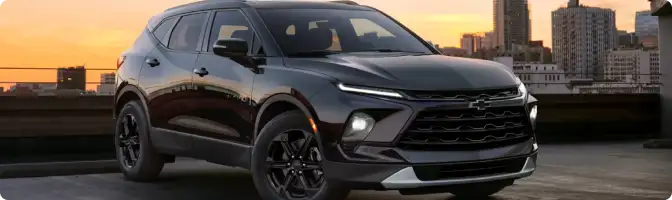
The clearest difference is engine philosophy. The Blazer offers two, while the CX-70 builds everything around one. The Blazer's standard 2.0-liter turbocharged four makes 228 horsepower and 258 lb-ft, and its available 3.6-liter V6 steps up to 308 horsepower and 270 lb-ft, both paired with a 9-speed automatic. The CX-70 runs a 3.3-liter turbocharged inline-six rated at 280 horsepower and 332 lb-ft on regular fuel, climbing to 340 horsepower and 369 lb-ft in Turbo S form on premium, with an 8-speed automatic and a mild-hybrid assist.
| Engine | Blazer | CX-70 |
|---|---|---|
| Standard engine | 2.0L turbo 4-cyl | 3.3L turbo inline-6 |
| Horsepower | 228 (2.0T) / 308 (3.6L V6) | 280 / 340 (Turbo S, premium) |
| Torque (lb-ft) | 258 (2.0T) / 270 (V6) | 332 / 369 (Turbo S) |
| Transmission | 9-speed automatic | 8-speed automatic |
| Electrified option | None | Mild hybrid; available plug-in hybrid |
That sets up the real trade-off. The Blazer's available V6 out-powers the CX-70's standard six, 308 horsepower to 280, but the CX-70's Turbo S tops both engines and carries the most torque of the group. The Blazer counters with flexibility: a thriftier four for buyers who do not need the V6, and the V6 when they do. The CX-70 also offers a plug-in hybrid, which this gas Blazer does not.

The CX-70's mild-hybrid six is efficient for its power. It rates 25 mpg combined, 24 city and 28 highway, with standard all-wheel drive, and the Turbo S comes in at 23 city. The front-drive Blazer 2.0-liter turbo rates 22 city and 29 highway, so it edges the CX-70 on the highway figure, while the V6 sits lower at 19 city and 26 highway. Adding all-wheel drive trims the Blazer's ratings slightly.
| Configuration | City / Highway |
|---|---|
| Blazer 2.0T front-drive | 22 / 29 |
| Blazer V6 front-drive | 19 / 26 |
| CX-70 inline-6 (AWD) | 24 / 28 |
The two land close on fuel, and the Blazer is the only one of the two with a front-drive option to begin with. Where the CX-70 pulls ahead is power-per-gallon: its inline-six is the more efficient way to get six-cylinder output.
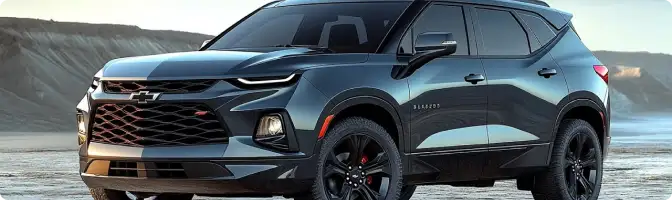
Towing is a Blazer advantage. Equipped with the V6 and the trailering package, the Blazer is rated to pull up to 4,500 pounds, 1,000 more than the CX-70's 3,500-pound rating. With the 2.0-liter and its trailering package, the Blazer tows up to 3,250 pounds, close to the CX-70.
Drivetrain is where the CX-70 answers. Every CX-70 comes with standard rear-biased i-ACTIV all-wheel drive, while the Blazer is front-wheel drive standard with all-wheel drive available across the lineup.
| Drivetrain and towing | Blazer | CX-70 |
|---|---|---|
| Standard drivetrain | Front-wheel drive | Standard AWD (i-ACTIV) |
| Max towing | 4,500 lbs (V6 with package) | 3,500 lbs |
That split makes the Blazer the lower-cost way into the class for buyers who do not need all-wheel drive, and the CX-70 the simpler pick for those who want it on every trim.

Cargo is where the CX-70's larger body shows. It holds 39.6 cubic feet behind the second row and 75.3 with the seats folded, against the Blazer's 30.5 and 64.2. The CX-70 is the bigger vehicle overall, roughly 10 inches longer on a longer wheelbase, so it carries more passenger room as well.
| Cargo and space | Blazer | CX-70 |
|---|---|---|
| Behind 2nd row (cu ft) | 30.5 | 39.6 |
| Seats folded (cu ft) | 64.2 | 75.3 |
| Seating | 5, two rows | 5, two rows |
The Blazer's trade-off is footprint. It is easier to maneuver and park, which counts for more on a daily Orange Park or Fleming Island drive than on a once-a-year road trip. Both seat 5 across two rows.
Inside, the CX-70 carries the larger central display, a 12.3-inch screen with standard wireless Apple CarPlay and Android Auto, available Bose audio, and a head-up display on higher trims. The Blazer runs Chevrolet Infotainment 3 on a 10.2-inch touchscreen, with available connected navigation on the Premium system.
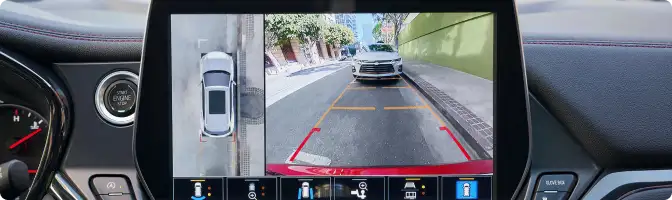
On driver assistance, the Blazer makes Chevy Safety Assist standard on every trim, with automatic emergency braking, front pedestrian braking, lane keep assist with lane departure warning, and forward collision alert. Teen Driver is standard as well. Adaptive cruise control and enhanced automatic emergency braking are available, and the available Driver Confidence II package adds HD Surround Vision and a Rear Camera Mirror. The CX-70 matches the core set with its i-Activsense suite, including standard Smart Brake Support, blind-spot monitoring, rear cross-traffic alert, and radar cruise control with stop and go.
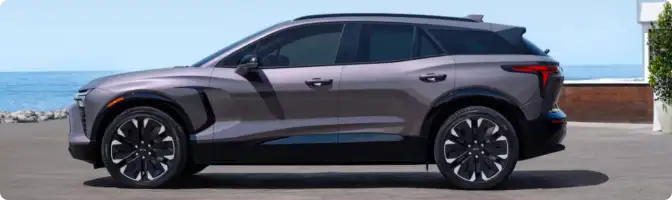
The lineups reflect the two strategies. The Blazer runs from its LT trims up through the sporty RS and the top Premier, with front-wheel drive standard and all-wheel drive available, so buyers choose how much to put toward drivetrain and engine. The CX-70 stays premium throughout: Turbo Preferred, Premium, and Premium Plus, then the Turbo S Premium and Premium Plus, every one with standard all-wheel drive, plus the separate plug-in hybrid line.
The Blazer's appeal here is value and flexibility. The CX-70's is a more uniformly upscale, loaded-by-default approach, with leather, ventilated seats, and the bigger displays arriving as you climb the range.
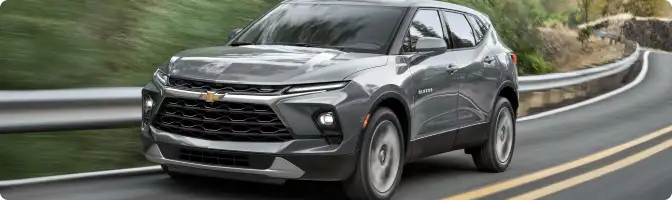
Choosing between these two comes down to priorities. The Blazer wins buyers who want a choice of engines, the higher tow rating, or a sharper value. The CX-70 pulls those who want standard all-wheel drive and a roomier, more premium cabin. For a lot of Clay County drivers, the Blazer lands at the right size, roomier than a compact and easier to live with than a three-row, for the everyday Orange Park and Fleming Island drive and the weekend gear runs toward the coast.
A new Blazer from Gordon Chevrolet also comes with 90 days of free paintless dent repair, so a stray cart or an early lot ding stays off your bill. If the trim, color, or engine you want is not on the lot, we can locate one for you or build it to order with the Chevrolet configurator, and the rest of the Chevrolet SUV lineup is there if you are still deciding on size. Pricing stays No Bull: one competitive figure, no add-on stickers, no forced packages, and no games on the total, with a trade welcome but never required.
Start the easy parts from home: value your trade or request a no-obligation cash offer, plan a monthly payment, and get prequalified with no impact to your credit score. More head-to-head matchups live on our Chevrolet comparisons page, and current 2026 Blazer inventory shows what is ready now. The surest way to settle it is to drive both, and the Blazer is here when you are.
These are the questions Blazer and CX-70 shoppers ask most.
It depends on the engine. The Blazer's available 3.6-liter V6 makes 308 horsepower, more than the CX-70's standard 280-horsepower inline-six. The CX-70's Turbo S, on premium fuel, makes 340 horsepower and the most torque of the group at 369 lb-ft. The Blazer's standard engine is a 228-horsepower turbo four.
The Blazer. With the V6 and the trailering package, it is rated for up to 4,500 pounds, 1,000 above the CX-70's 3,500. The 2.0-liter four, similarly equipped, pulls up to 3,250.
Yes. Front-wheel drive is standard, and all-wheel drive is optional on every Blazer trim. The CX-70 differs by including rear-biased i-ACTIV all-wheel drive as standard equipment.
It is available. The Blazer's standard engine is a 2.0-liter turbocharged four, and the 3.6-liter V6 is offered as a step up. The CX-70 does not offer a V6; its gas engine is a turbocharged inline-six.
The CX-70, and by a clear margin. It carries 75.3 cubic feet with the second row folded and 39.6 behind it, versus 64.2 and 30.5 for the Blazer. The CX-70 is the larger vehicle overall.
The CX-70, on balance. Its inline-six returns 25 mpg combined even with standard all-wheel drive, which tops the Blazer's V6 and is strong for the power on offer. The Blazer's front-drive 2.0-liter turbo, though, takes the highway number at 29.
This Blazer is gas-powered, offered with a turbo four or a V6, and does not have a plug-in hybrid. The CX-70 offers one alongside its inline-six.
It measures 10.2 inches, with Chevrolet Infotainment 3 and connected navigation offered on the Premium system. The CX-70's center screen is larger, at 12.3 inches.
Chevy Safety Assist is standard on every Blazer, with automatic emergency braking, front pedestrian braking, lane keep assist with lane departure warning, and forward collision alert, among others. Teen Driver is standard too. Adaptive cruise control, enhanced automatic emergency braking, and the Driver Confidence II package with HD Surround Vision are available.
You can see and drive the Blazer at Gordon Chevrolet, on the money-saving end of Blanding Blvd in Orange Park, an easy trip for Clay County and greater Jacksonville shoppers. Current Blazer inventory is online to browse before you visit.